Question library
197 questions for couples, organized by category
Last reviewed: September 2026
Every question on YesList works the same way: you and your partner each rate it privately, as a no, a maybe, or a yes, and a match only shows up once you've both landed on yes for the same thing. Below is the full library - 197 questions across 10 categories, from slow-paced romance to more adventurous territory - broken out so you can see what's actually in each one before you start.
The 10 categories
Categories run roughly from gentle to more adventurous. You don't have to work through them in order, and answering in one category never obligates you to answer in another.
- Romance (16 questions) - the rituals and gestures that keep two people close.
- Foreplay (33 questions) - anticipation, touch, and everything before the main event.
- Location Play (13 questions) - trying something familiar in a new setting.
- Positions (16 questions) - specific positions to rate and try together.
- Oral (14 questions) - giving, receiving, and everything in between.
- Intercourse (21 questions) - pacing, focus, and communication during sex itself.
- Sex Toys (27 questions) - toys, accessories, and who's in control of them.
- Erotic Content (10 questions) - reading, watching, and sharing as a couple.
- Anal (23 questions) - paced, comfort-first exploration.
- BDSM & Kink (24 questions) - power exchange, sensation, and roleplay.
Why questions are grouped this way
Grouping by category makes it easier to answer honestly. Rating "Romance" questions doesn't put you in the mindset of rating "BDSM & Kink" ones, and you're not forced to consider every category in a single sitting. Most couples work through a category or two at a time, over days or weeks, rather than trying to finish all 197 at once.
It also makes it easier to be specific with your partner afterward. "We matched on three things in Foreplay" is a much easier sentence to say out loud than trying to summarize 197 individual answers at once.
What "yes," "no," and "maybe" actually mean here
A yes means you'd like to try it, or that you already have and enjoyed it. A no means it's not something you want to do together right now - it's never shown to your partner, and it never needs to be explained. A maybe sits in between: not a yes yet, but not a closed door either. Only mutual yeses ever surface as a match, so a no or an unanswered maybe carries zero risk of an awkward reveal.
-
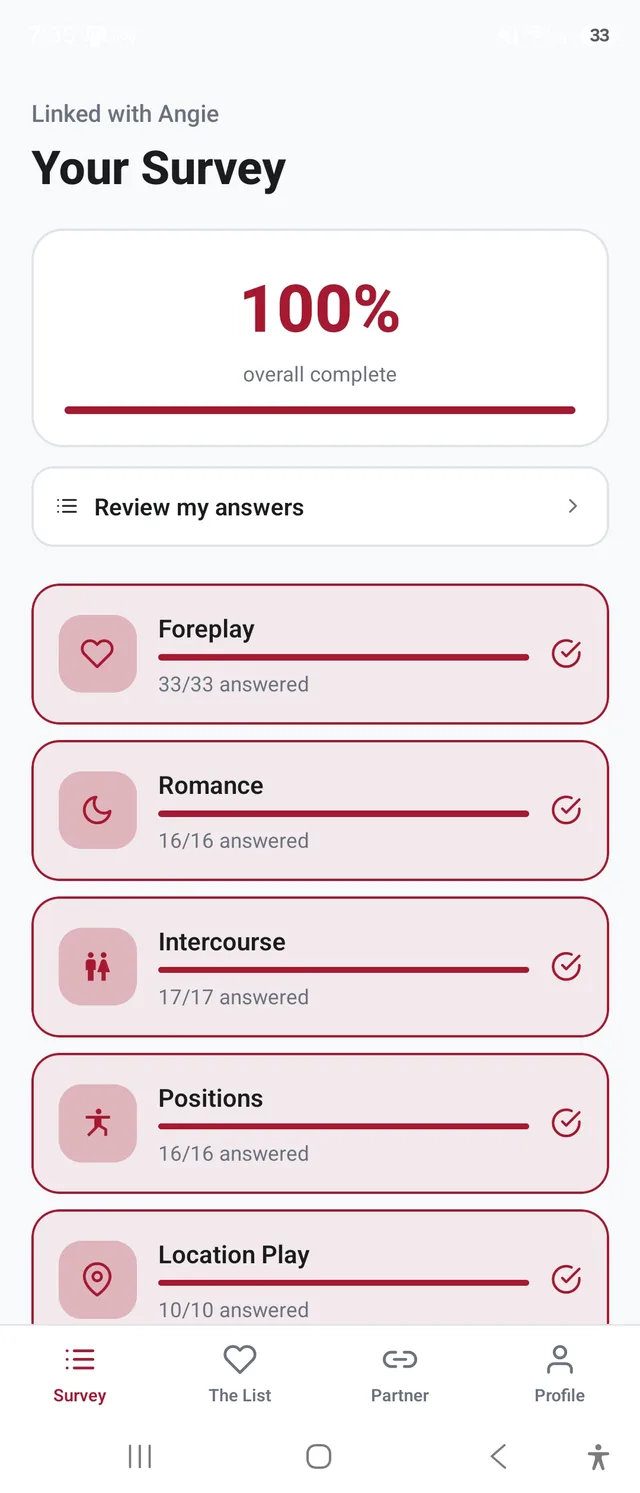
Work through categories at your own pace -
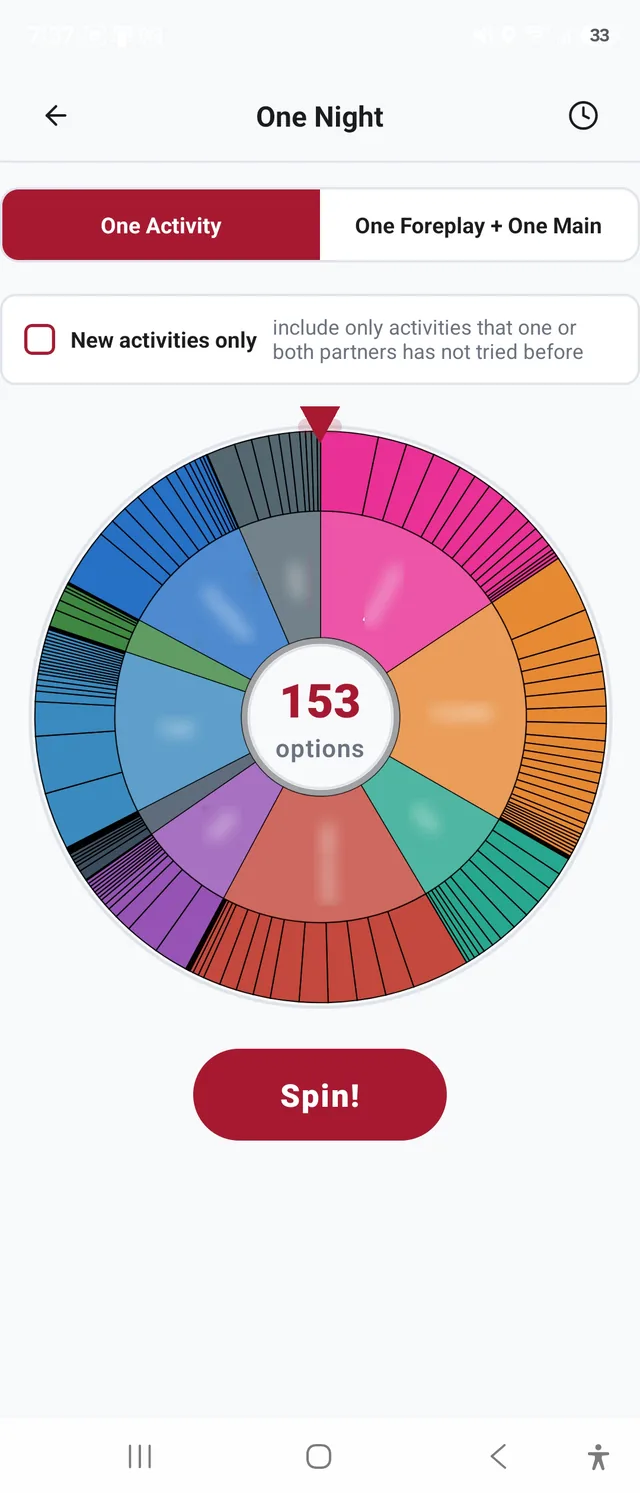
Spin for a random activity from any category -
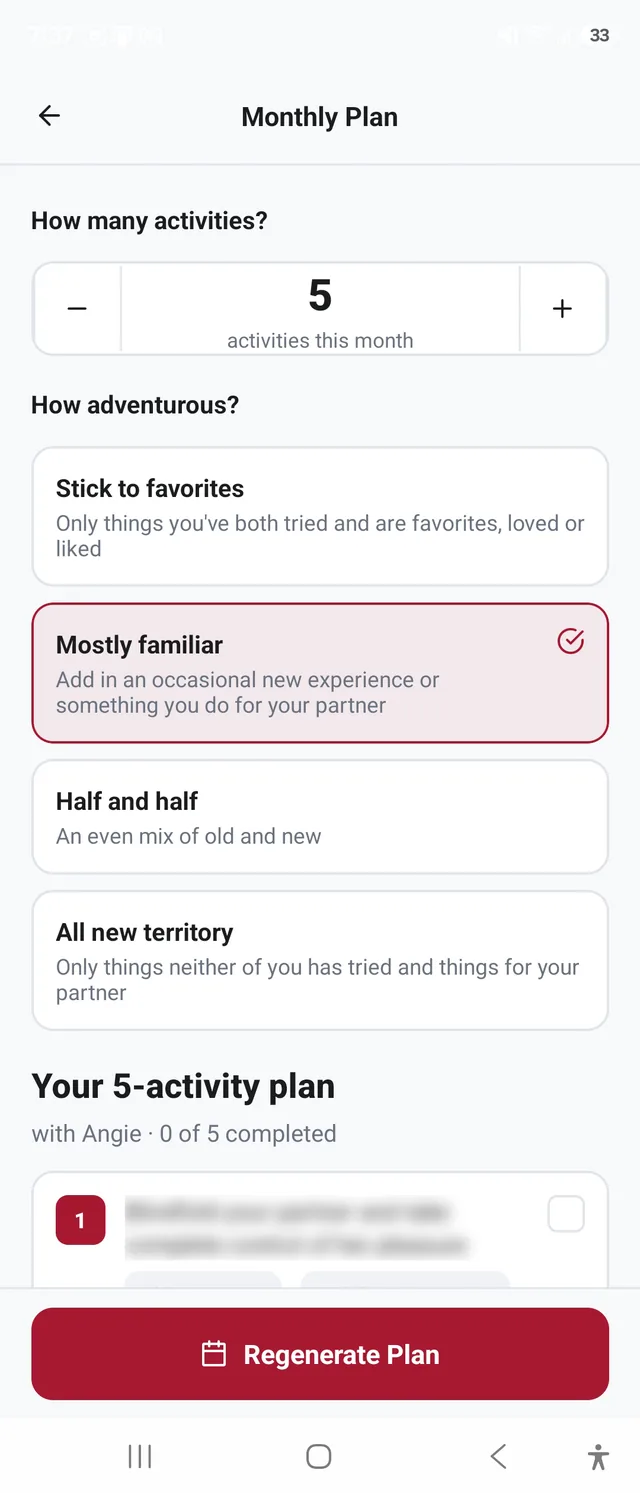
Build a plan from your shared matches
Where to start
If you're not sure which category to open first, start with whichever feels lowest-stakes for you - Romance and Foreplay are the most common starting points. Or skip the decision entirely and try the free taster quiz, which pulls a short sample from every category so you get a feel for the whole library in a few minutes, no account required.
Frequently asked questions
How many questions does YesList have?
197, spread across 10 categories. Every question is a yes/no/maybe item you and your partner each answer privately - a match only appears once you've both said yes to the same thing.
Do I need an account to see the questions?
You need a free account to answer and save your own list, since your answers are private until your partner links up and you both match. You can try a free 24-question taster with no account at all - see the quiz link below.
Are all 197 questions available in the app?
Most are. A smaller, policy-safe subset of the more explicit categories is app-store compliant and ships in the mobile app; the fuller versions of those categories are available on the website. Every category has app-available questions.
Can we skip categories we're not interested in?
Yes. Nothing forces you through every category, and skipping one entirely never affects the categories you do answer. A yes/no/maybe list only ever surfaces matches for items you both actually rated.
How is this different from a generic couples quiz?
A quiz usually gives you one shared score. This is 197 specific, individually-rated items - the output is an actual list of things you both want to try, not a personality label.